Planetary Nebulae
Stars go through a 'lifetime,' an evulotion from birth to death. How fast they do this has to do with their mass. More massive stars burn brighter and live shorter lives.
It is currently believed that stars with 20-25 times the Sun's mass will become
black holes. Those of lesser mass, however, will go through a complex shedding of their outer layers, leaving behind a white drawf or neutron star to eventually cool.
Planetary nebula are the shells of gas that stars have shed in the past. They are often changing as they expand into whatever surrounds them. They often have
exotic shapes and colors, as the expanding shells interact with the dark interstellar
medium.
Each pair shows the original photograph on the left and the annotated version
on the right. Annotations generated by GPT; photographs by Dog-Star Observatory,
Cape Haze, FL. Click either photograph to open its larger version.
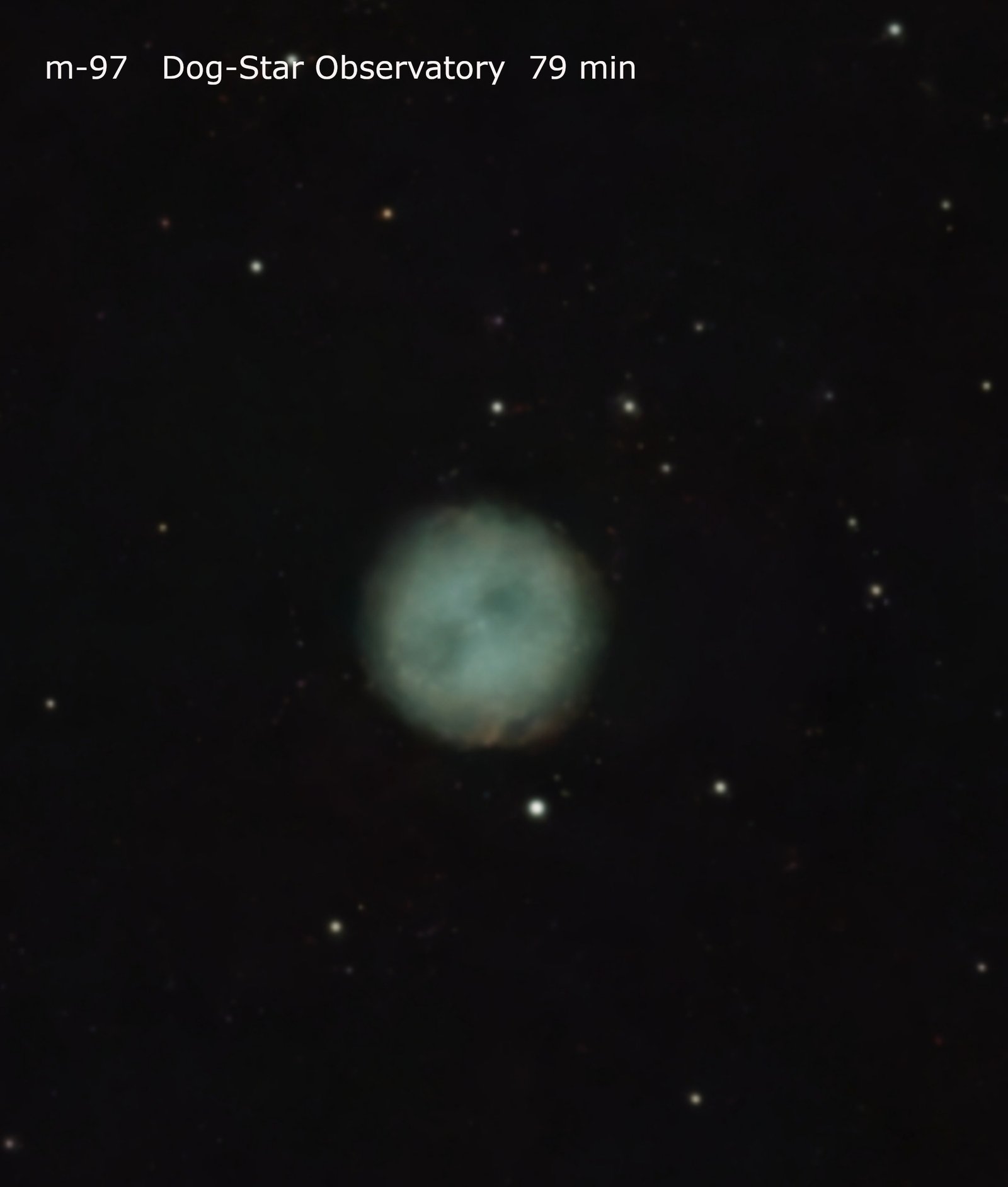
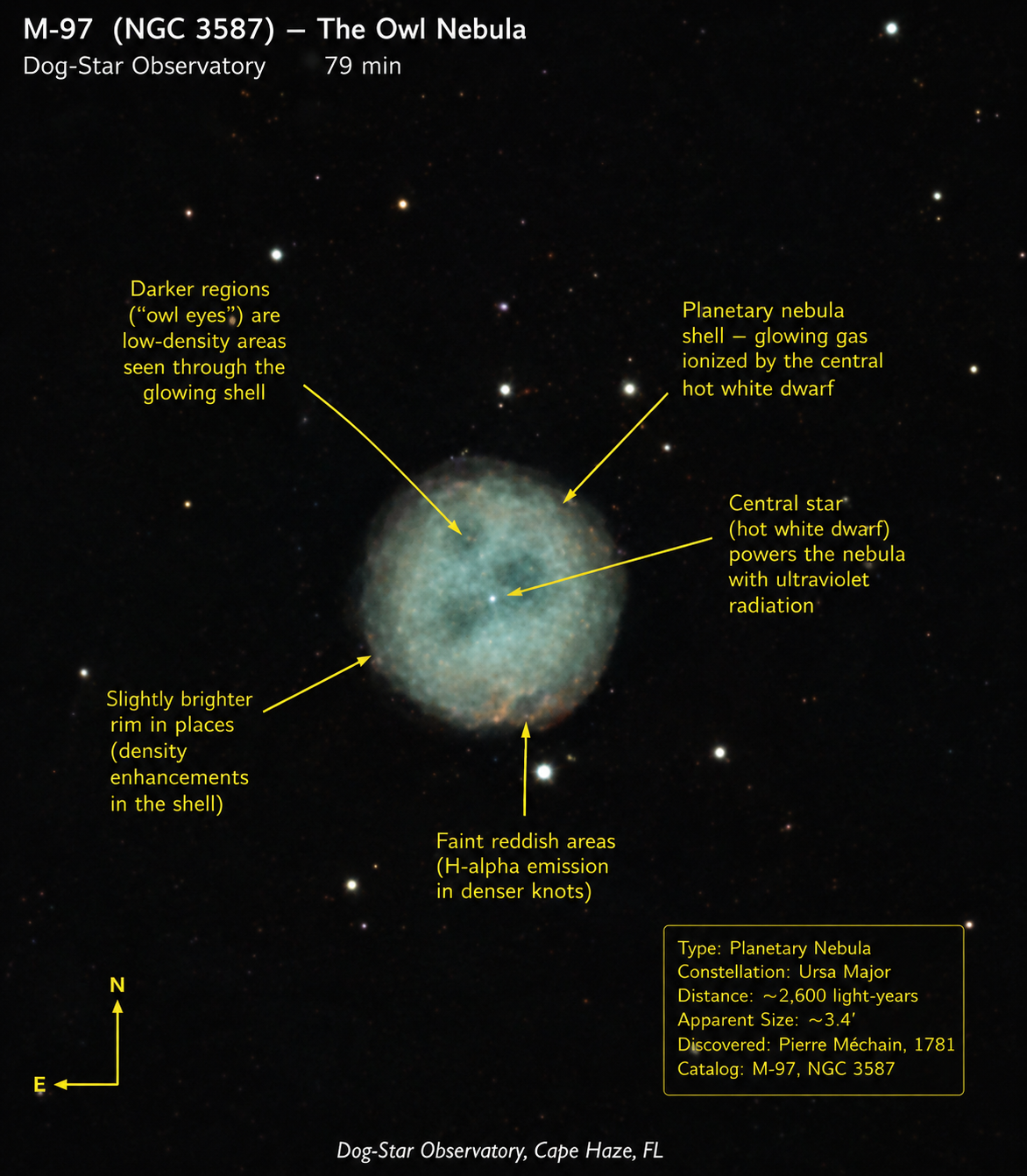
Picture 1 — Messier 97 (M97 / NGC 3587) — Owl Nebula
Messier 97 is a planetary nebula in Ursa Major formed when a Sun-like star expelled its outer atmosphere near the end of its life. The nebula is roughly spherical overall, but its internal structure produces two darker-looking regions that give the object its familiar “owl face” appearance. The glowing gas is energized by ultraviolet radiation from the hot stellar remnant at the center.
Planetary nebulae such as M97 represent a short-lived phase of stellar evolution. The expanding gas gradually thins into the surrounding interstellar medium, while the exposed core contracts toward the white-dwarf stage. M97 is especially interesting because its apparent “eyes” are not empty holes, but regions where the geometry and density of the ionized gas make the nebula appear fainter along particular lines of sight.
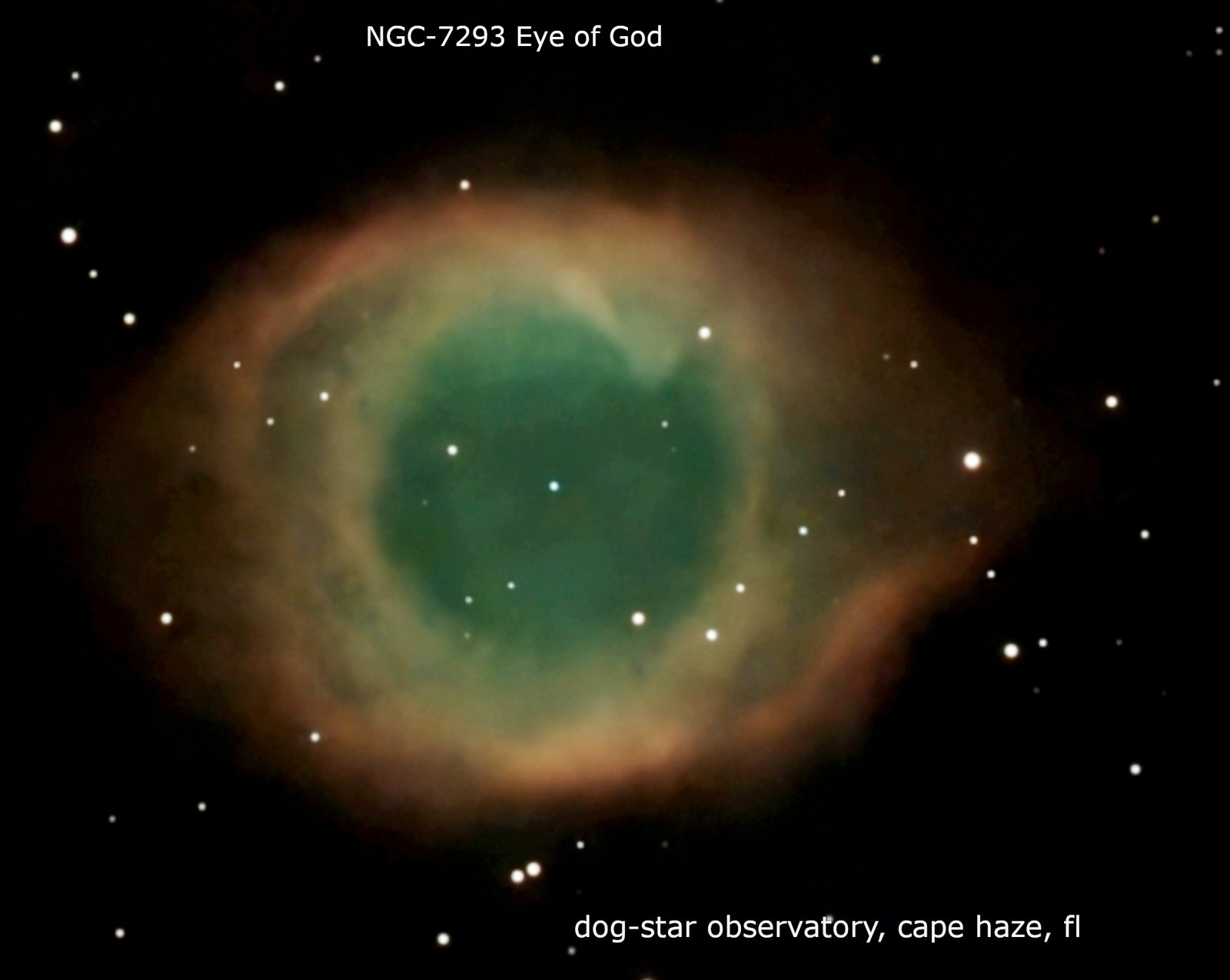
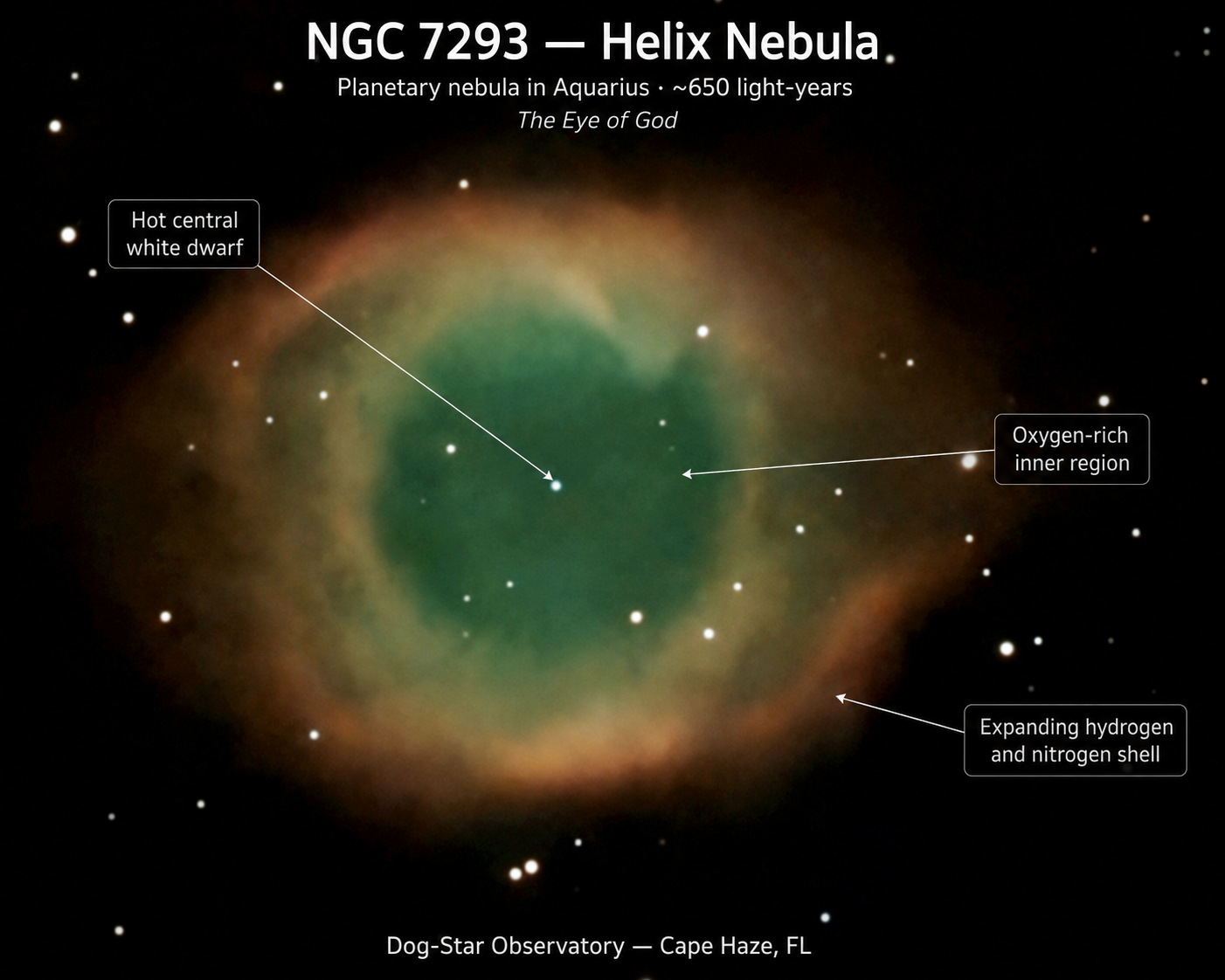
Picture 2 — NGC 7293 — Helix Nebula
NGC 7293, the Helix Nebula in Aquarius, is one of the nearest and largest planetary nebulae in apparent size. It consists of expanding shells of gas shed by a dying low- to intermediate-mass star. Its broad ringlike appearance is partly a projection effect: the true structure is three-dimensional, with ionized gas arranged in a complex system of shells and filaments surrounding the hot central white dwarf.
The Helix is especially famous for its many small cometary knots—dense clumps of gas whose bright heads face the central star while faint tails extend away from it. These structures show how radiation and stellar winds interact with denser material inside the nebula. Because of its proximity, NGC 7293 is a key laboratory for studying how planetary nebulae return enriched material to the interstellar medium.
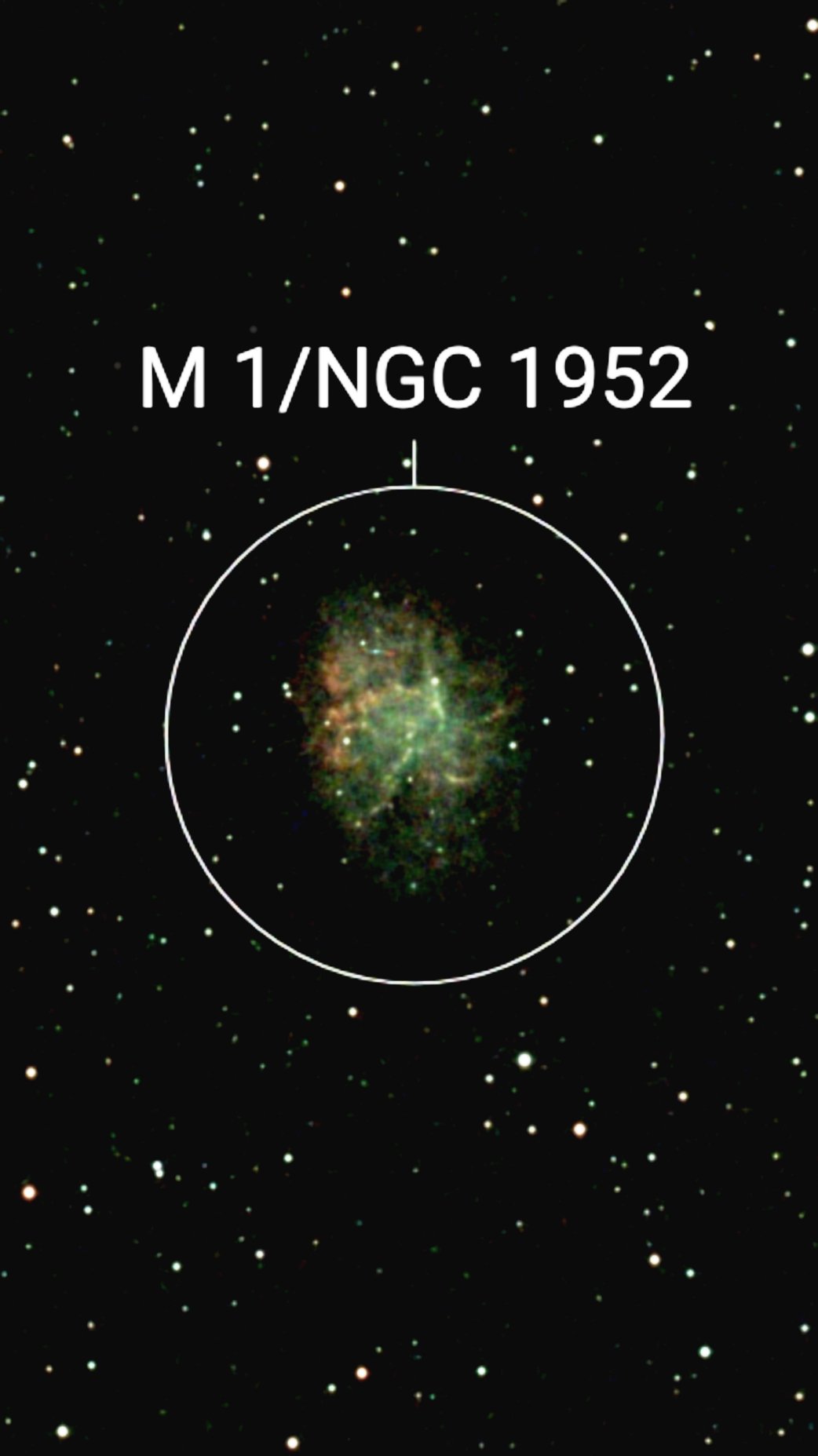
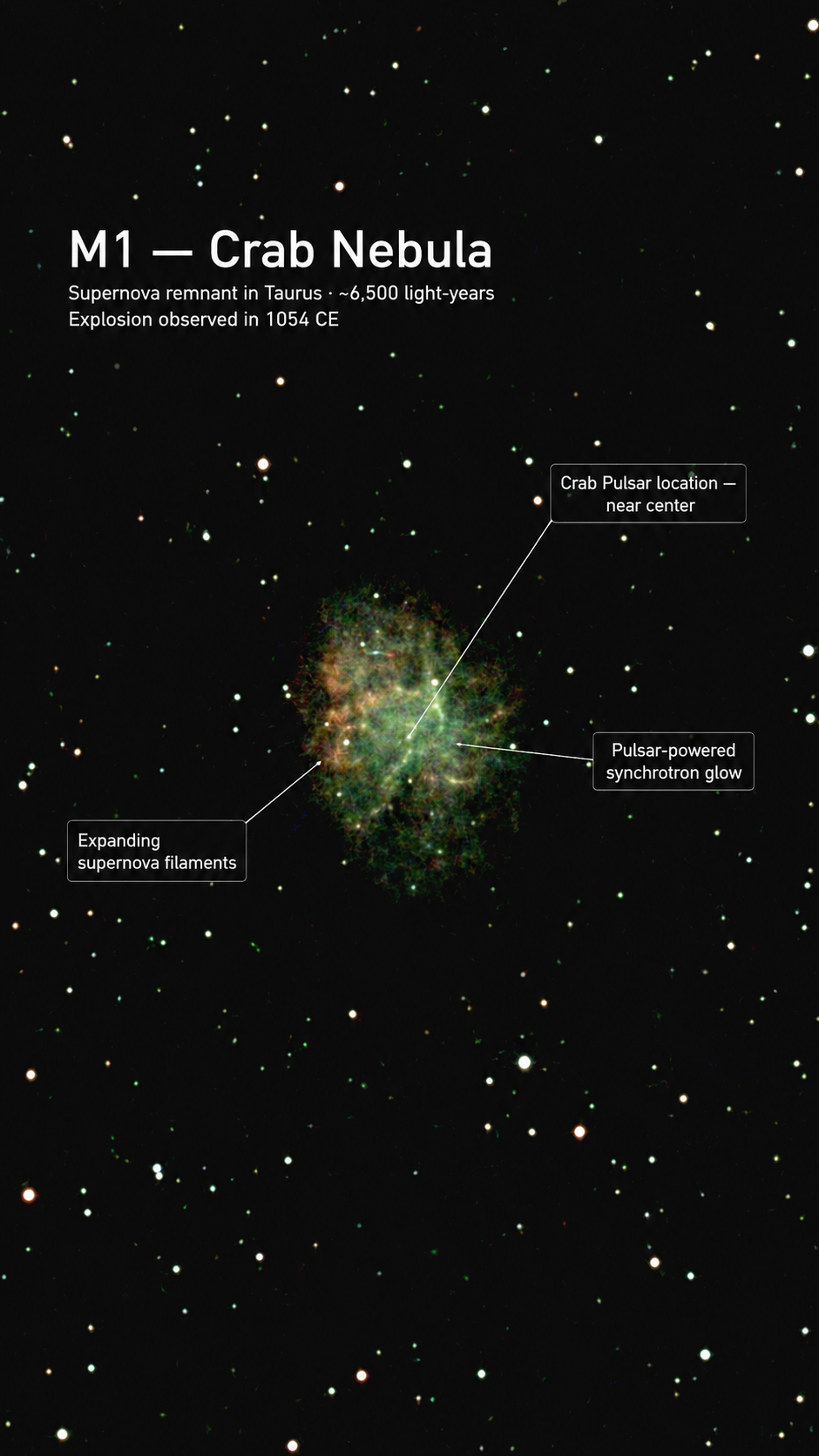
Picture 3 — Messier 1 (M1 / NGC 1952) — Crab Nebula
Messier 1 is included here for comparison, but it is not a planetary nebula. It is a supernova remnant in Taurus produced by the stellar explosion observed from Earth in the year 1054. The expanding cloud contains filaments of gas moving outward at high speed, while the central neutron star—the Crab Pulsar—rotates rapidly and injects energy into the surrounding nebula.
M1 is physically very different from the planetary nebulae on this page. Planetary nebulae are produced by relatively gentle mass loss from stars that end as white dwarfs, whereas the Crab resulted from the catastrophic core collapse of a massive star. Its continuing emission is powered in large part by the pulsar and its relativistic wind, making M1 one of the most important laboratories for studying supernova remnants, neutron stars, and high-energy astrophysics.
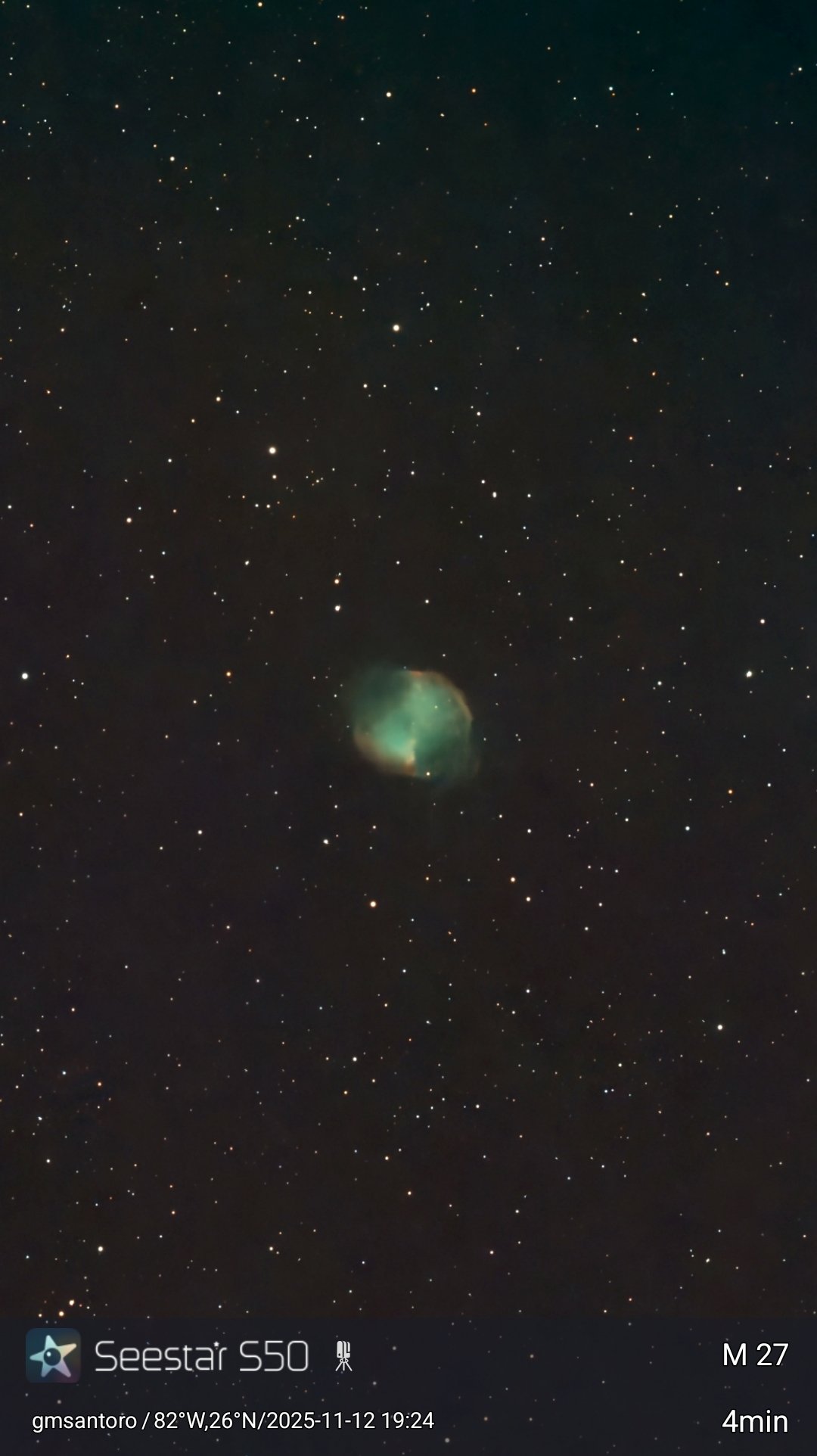
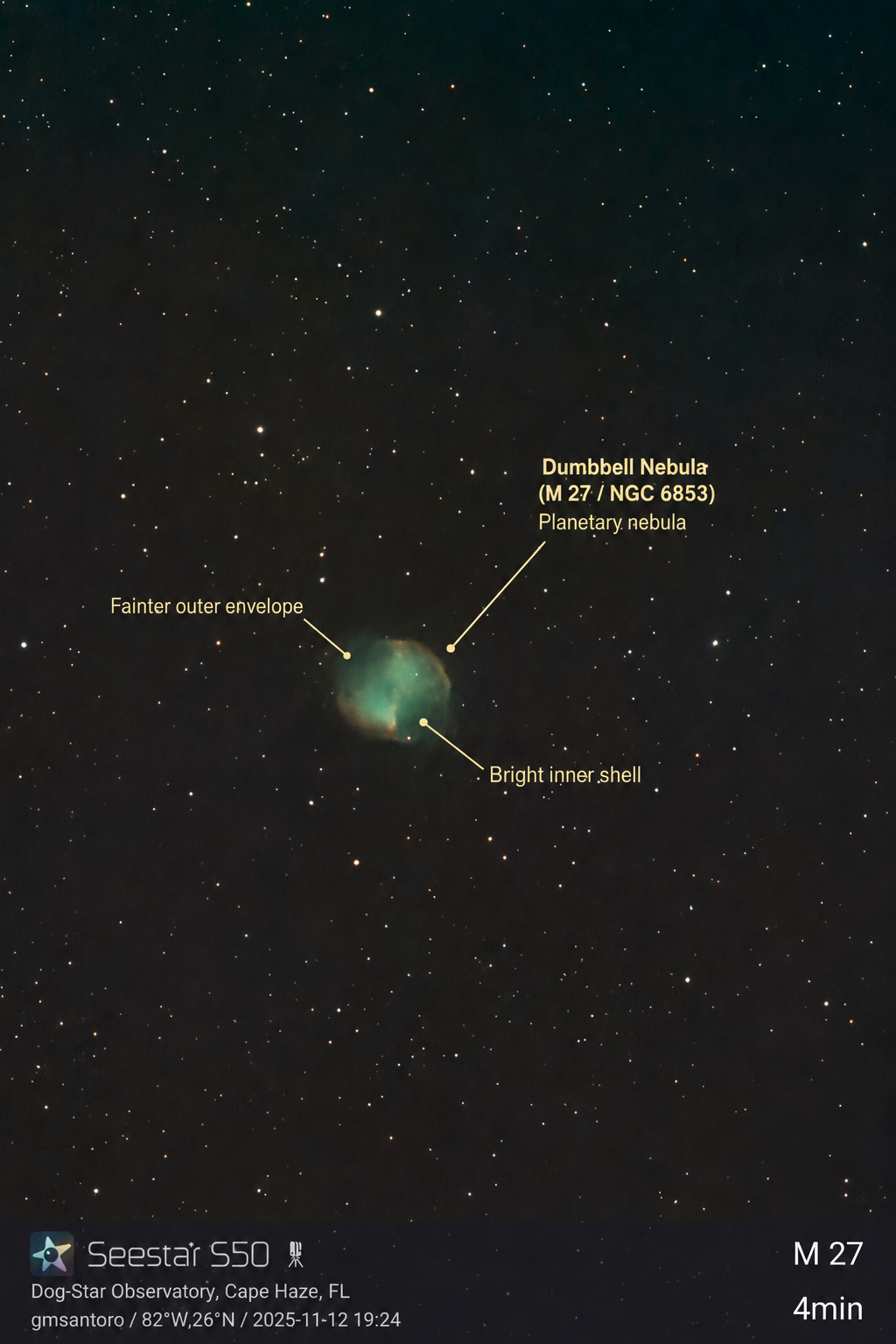
Picture 4 — Messier 27 (M27 / NGC 6853) — Dumbbell Nebula
Messier 27 is a bright planetary nebula in Vulpecula and one of the easiest examples of its class to observe. Its distinctive dumbbell or hourglass shape is produced by expanding ionized gas surrounding a very hot central stellar remnant. The nebula contains strong emission from oxygen and hydrogen, which produces much of the blue-green and reddish structure seen in photographs.
The shape of M27 demonstrates that the mass loss from dying stars is often far from perfectly spherical. Interactions between stellar winds, magnetic fields, and previously ejected material can channel the gas into lobes and shells. As the nebula continues to expand, its density will fall and the glowing material will eventually merge with the surrounding interstellar medium, while the central star cools as a white dwarf.
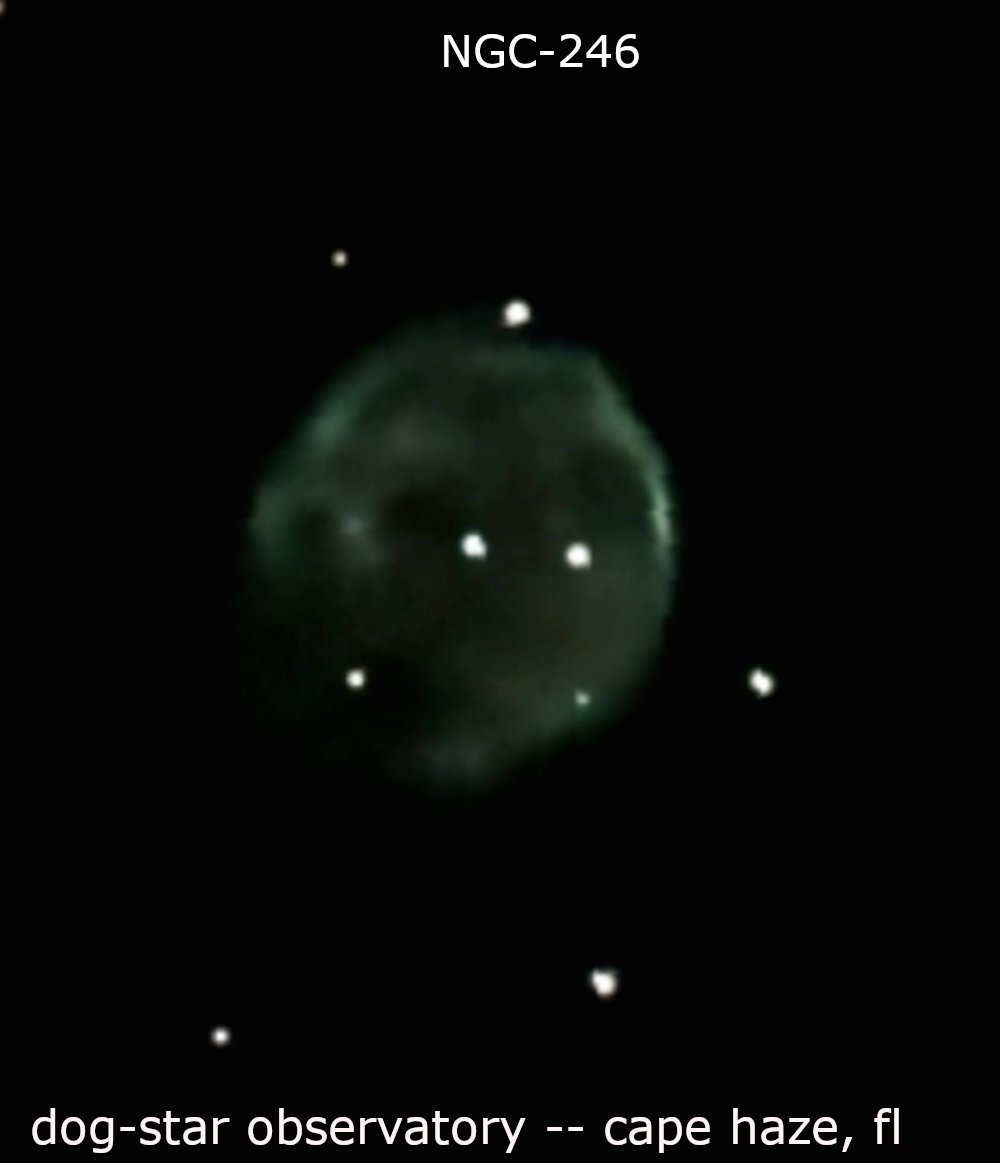
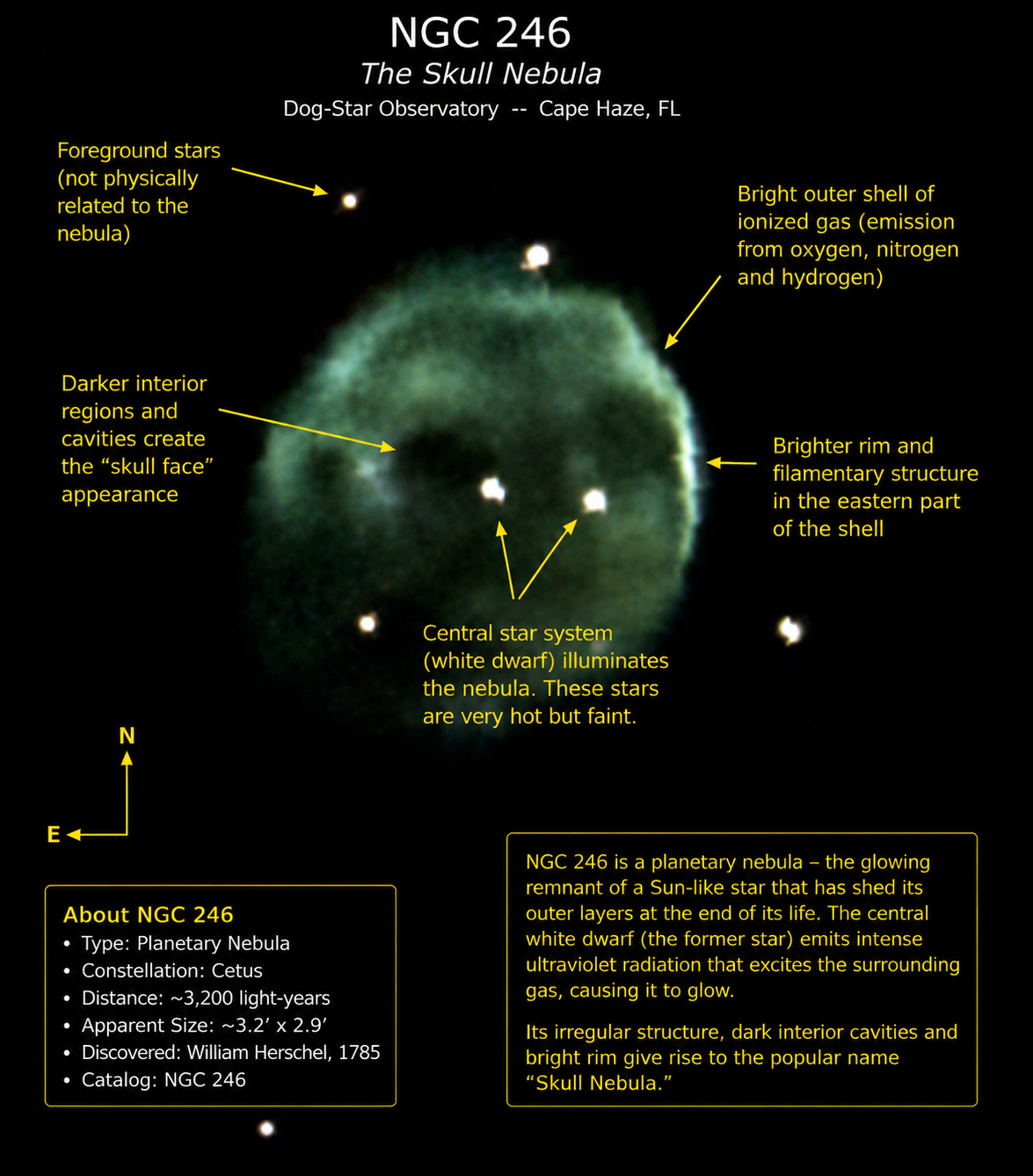
Picture 5 — NGC 246 — Skull Nebula
NGC 246 is a planetary nebula in Cetus whose irregular shell gives rise to the nickname Skull Nebula. The object consists of gas expelled by an aging star and ionized by the extremely hot remnant at its center. Its uneven brightness reflects a combination of true density variations in the gas and the three-dimensional geometry of the expanding shell.
NGC 246 is a useful example of how complex planetary nebulae can become during the late stages of stellar evolution. Rather than forming a simple uniform sphere, the ejected material develops knots, arcs, and cavities as winds from the central star interact with older, slower-moving gas. These structures preserve a record of the star’s changing mass-loss history shortly before it entered the white-dwarf stage.
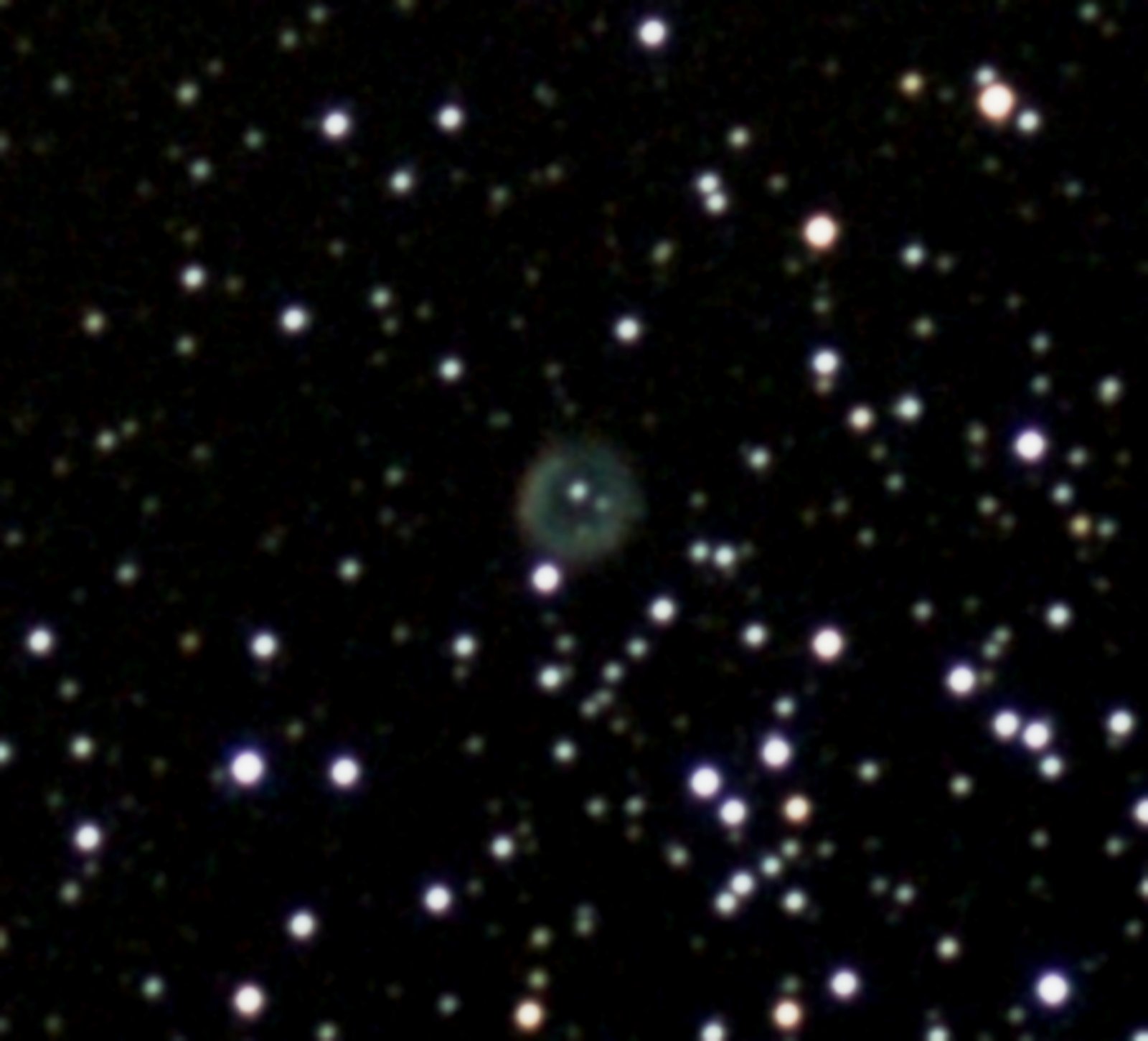
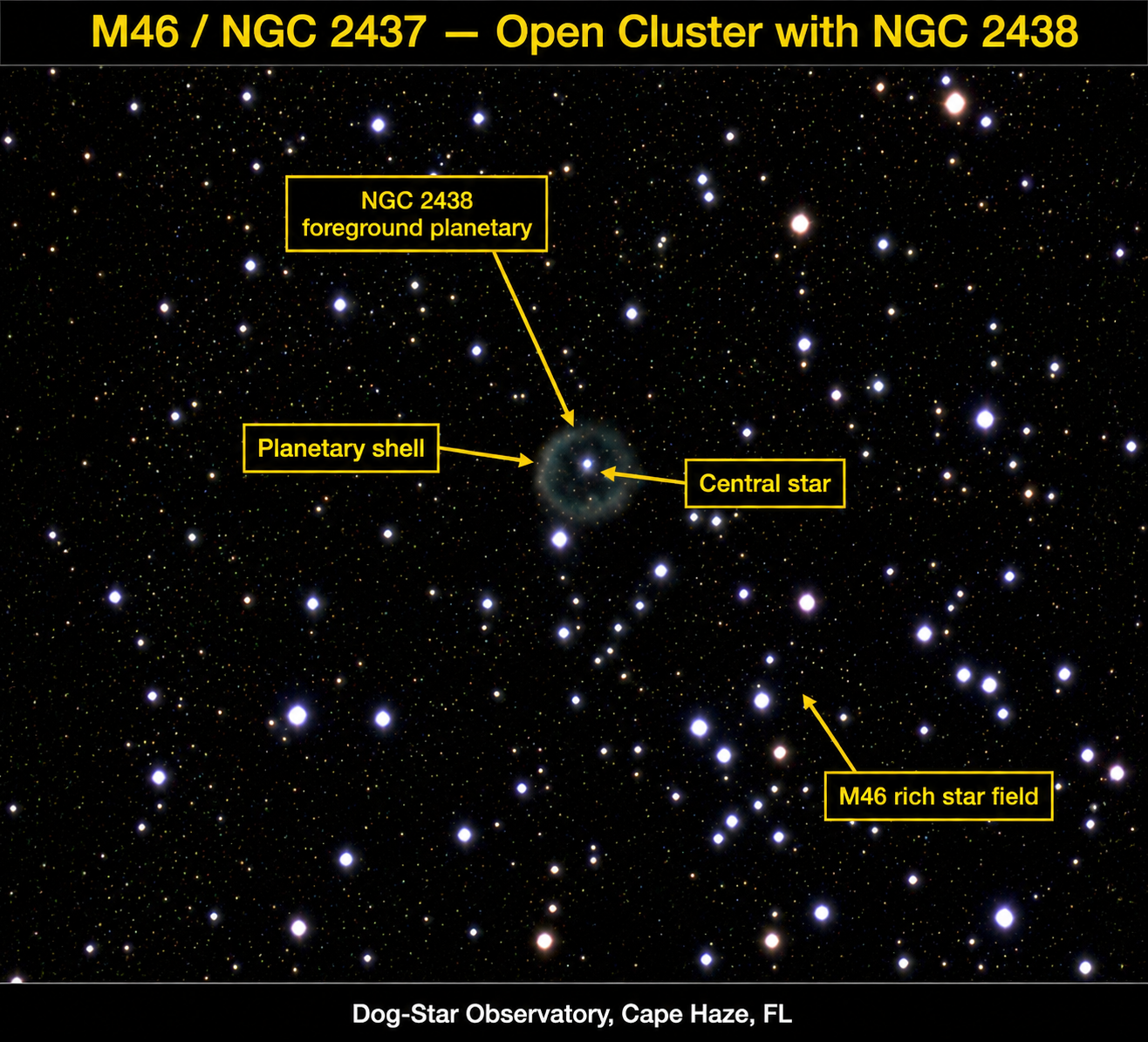
Picture 6 — NGC 2438 — Planetary Nebula in the M46 Field
NGC 2438 is a planetary nebula seen in the same line of sight as the rich open cluster Messier 46. The visual overlap is striking, but the nebula and cluster are not physically associated: measurements of distance and motion show that NGC 2438 lies in the foreground. The nebula is the expanding atmosphere of an evolved star whose exposed hot core now ionizes the surrounding gas.
This field is an excellent teaching example of the difference between angular proximity and true physical association. Two objects can appear superimposed on the sky while occupying very different positions in three-dimensional space. NGC 2438 therefore provides both a clear example of planetary-nebula evolution and a reminder that astronomers must use parallax, radial velocity, proper motion, and other measurements to determine whether apparently neighboring objects are actually related.
Back to top
Home
Copyright G.M. Santoro, PhD, 2026 |
contact-gmsantoro@gmail.com