Globular Clusters
Globular clusters are enormous, tightly bound collections of old stars that orbit mainly in the halo of the Milky Way and other large galaxies. Unlike open clusters, which are relatively young, loose, and concentrated in the Galactic disk, globular clusters are ancient systems containing tens of thousands to millions of stars packed into nearly spherical shapes. Many are more than 10 billion years old, so they preserve stellar populations that formed early in the history of the Galaxy.
Because their stars formed under broadly similar conditions, globular clusters are valuable laboratories for studying stellar evolution, chemical composition, and the early assembly of galaxies. Their dense cores also make them dynamically interesting environments where close stellar encounters occur far more often than in the solar neighborhood. Some globular clusters may even be remnants of small galaxies that were absorbed by the Milky Way, making them useful not only for studying stars, but also for reconstructing the history of the Galaxy itself.
Each pair shows the original photograph on the left and the annotated version
on the right. Annotations generated by GPT; photographs by Dog-Star Observatory,
Cape Haze, FL. Click either photograph to open its larger version.
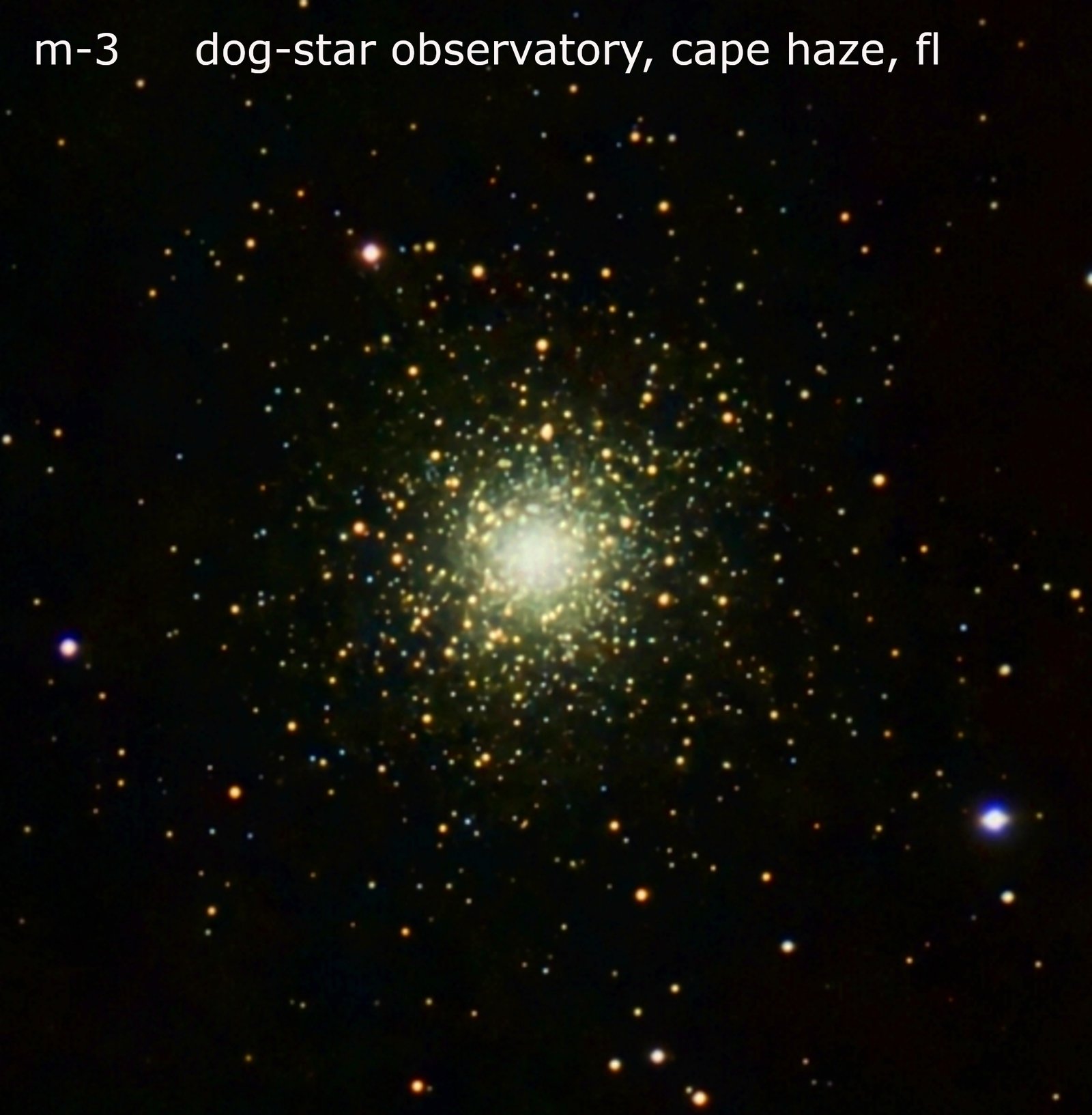
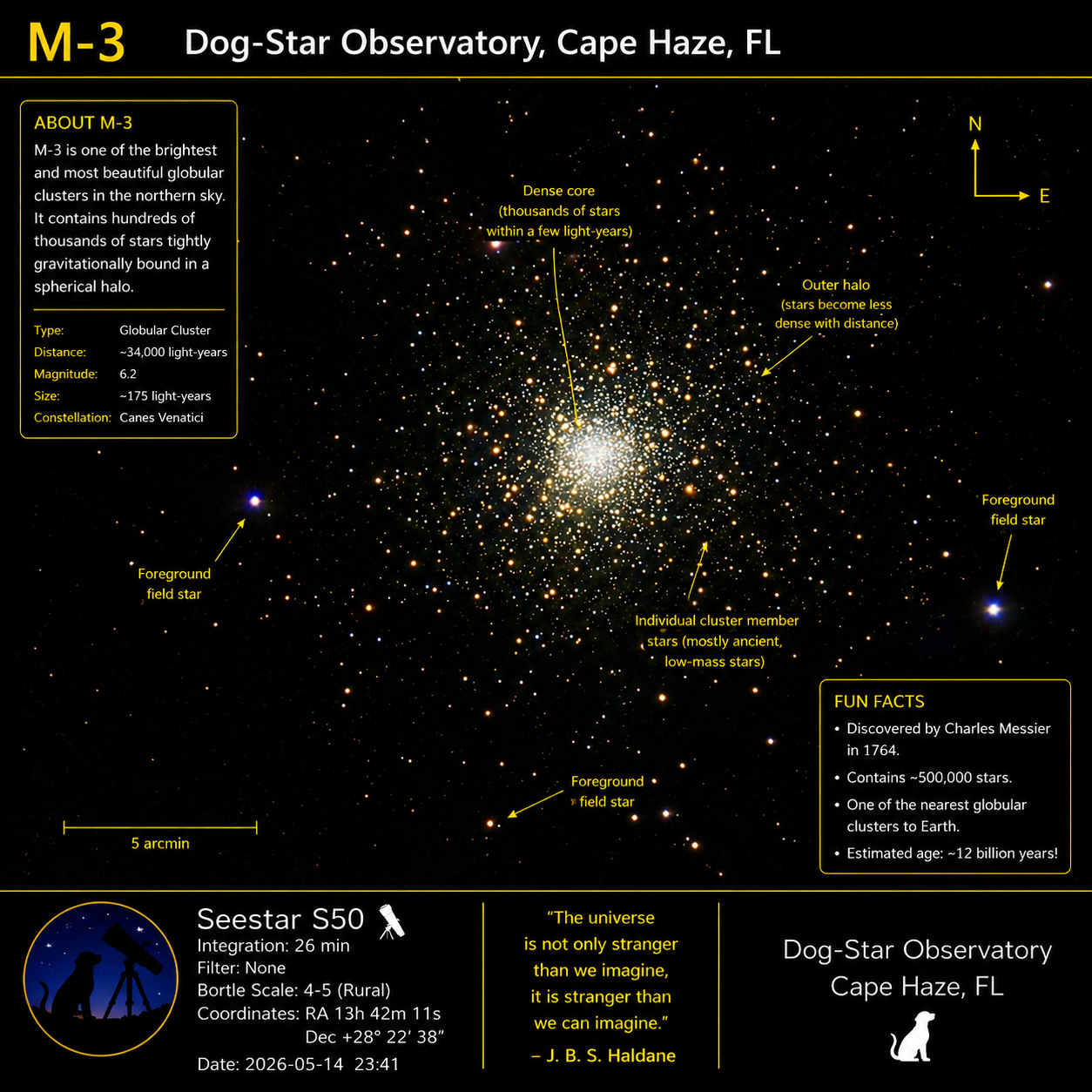
Picture 1 — Messier 3 (M3) — Globular Cluster
Messier 3 is one of the largest and brightest globular clusters in the Milky Way. Located about 34,000 light-years away in the constellation Canes Venatici, it contains several hundred thousand stars packed into a roughly spherical region about 180 light-years across. Most of its stars are very old—around 11 to 12 billion years in age—and formed early in the history of our Galaxy. The bright, crowded core seen in the photograph results from the enormous concentration of stars near the cluster's center, while the more diffuse outer halo gradually thins into the surrounding sky.
M3 is especially important in astronomy because it contains an unusually large population of variable stars, including many RR Lyrae variables. These pulsating stars have predictable relationships between their luminosity and pulsation properties, allowing astronomers to use them as standard candles for estimating distances. Globular clusters such as M3 also provide clues to the early formation of the Milky Way because they preserve some of its oldest stellar populations. Their stars generally contain fewer elements heavier than helium than younger disk stars, reflecting the simpler chemical composition of the early universe.
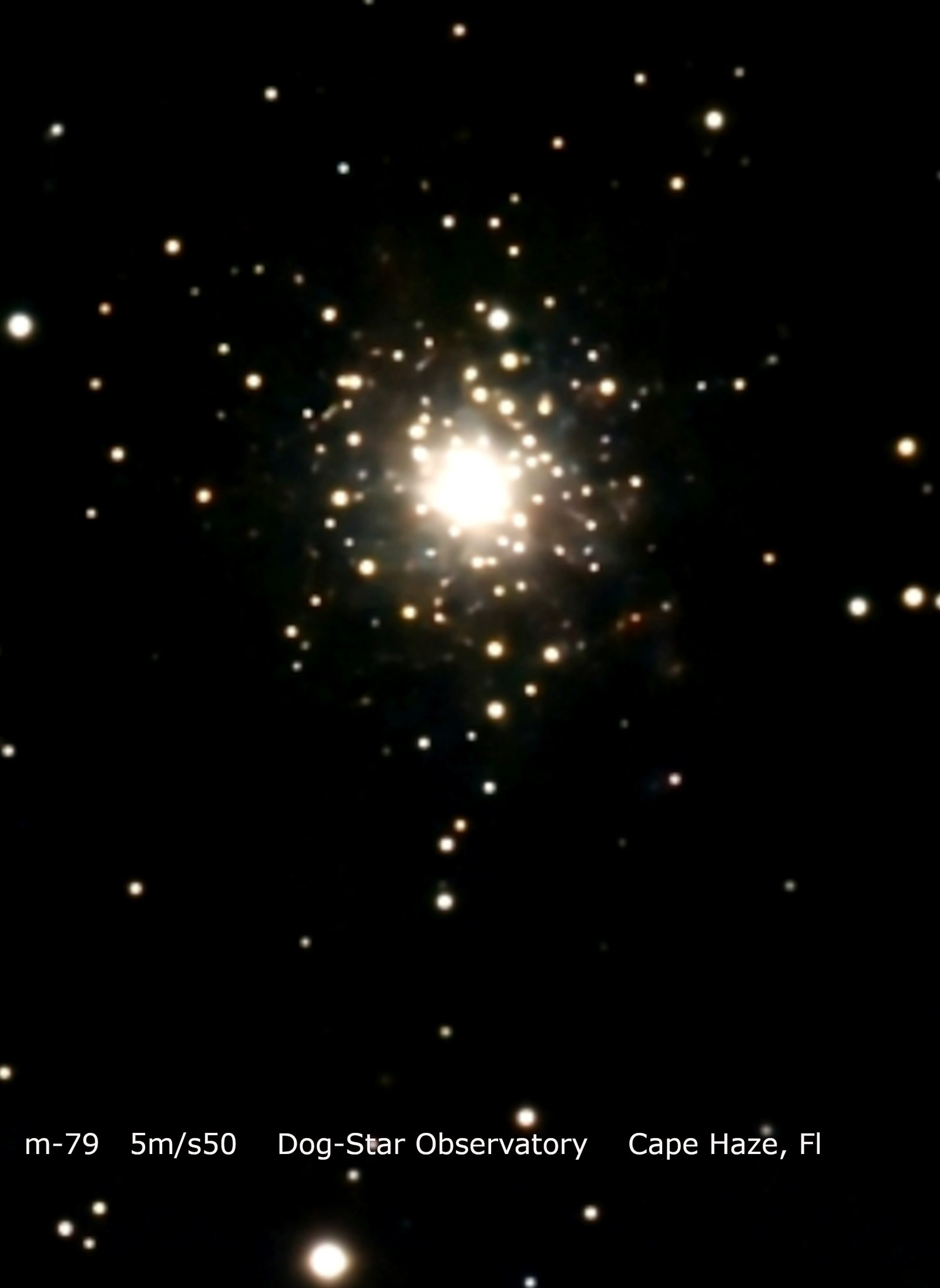
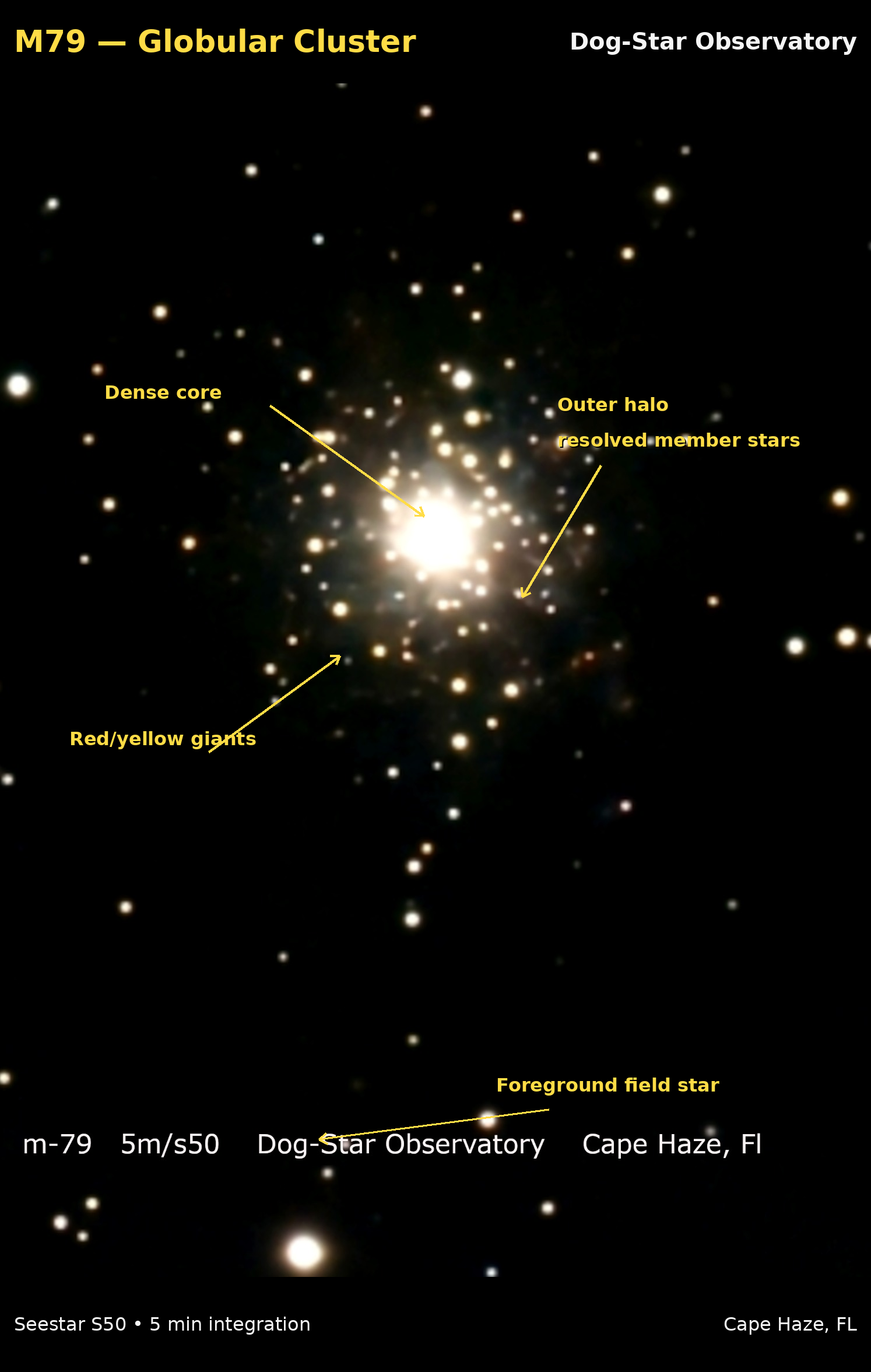
Picture 2 — Messier 79 (M79) — Globular Cluster
Messier 79 is a compact globular cluster in the constellation Lepus, about 42,000 light-years from Earth. Like M3, it is composed primarily of very old stars and is gravitationally bound into a dense, nearly spherical system. Its bright core is produced by a high concentration of stars packed into a relatively small volume, while the outer members become progressively more widely spaced. M79 lies well outside the Sun's region of the Galactic disk and belongs to the extended halo population of the Milky Way.
M79 is especially interesting because its location and motion suggest that it may have originated in a smaller galaxy that was later captured and disrupted by the Milky Way, although the details remain an active area of study. If so, the cluster would be a surviving relic of galactic cannibalism—evidence that large galaxies grow in part by absorbing smaller systems. Globular clusters therefore serve not only as laboratories for stellar evolution, but also as fossils that help astronomers reconstruct the assembly history of the Galaxy itself.
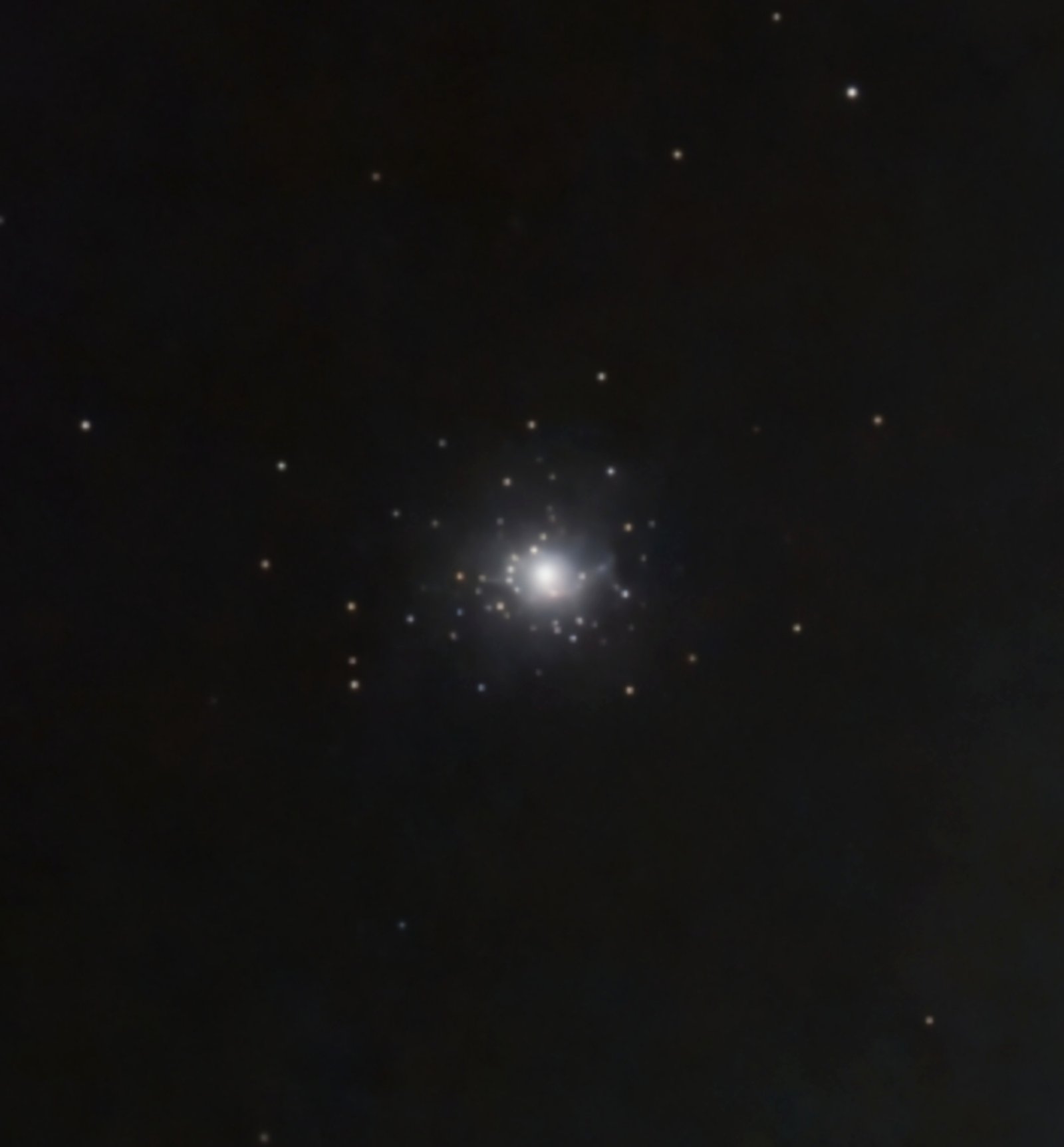
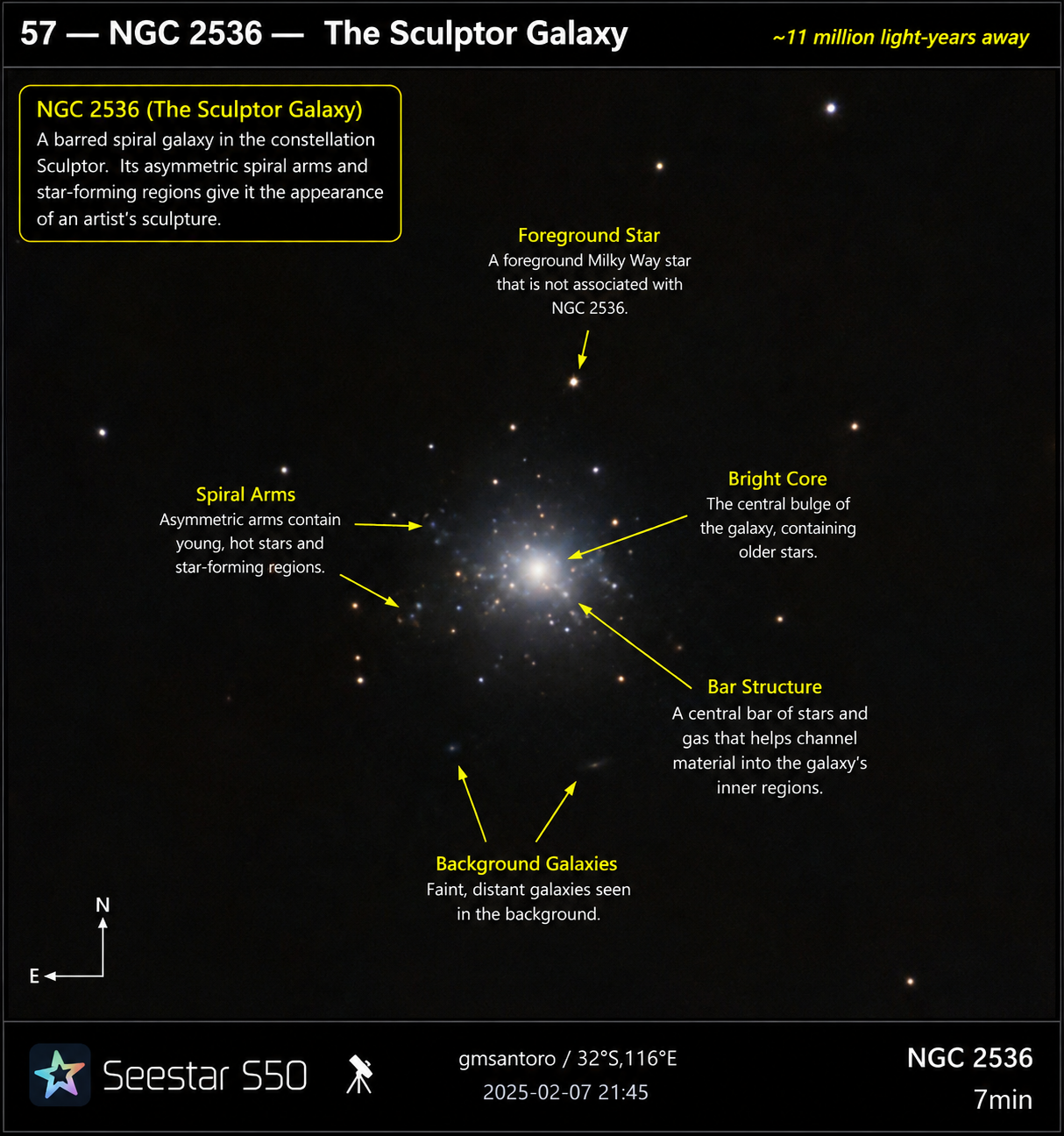
Picture 3 — NGC 1851 — Globular Cluster
NGC 1851 is a bright, compact globular cluster in the southern constellation Columba, located roughly 40,000 light-years from Earth. It contains a dense population of ancient stars packed into a nearly spherical system held together by gravity. Like most globular clusters, NGC 1851 belongs primarily to the halo population of the Milky Way and preserves stars that formed very early in the Galaxy's history.
NGC 1851 is especially interesting because its stellar population is more complicated than the simple, single-age population once expected for globular clusters. Detailed observations reveal multiple stellar populations and a split subgiant branch, suggesting that star formation or chemical enrichment occurred in more than one episode. These features have made NGC 1851 an important object for studying how globular clusters formed and evolved, and whether some clusters may preserve evidence of more complex origins within systems later incorporated into the Milky Way.
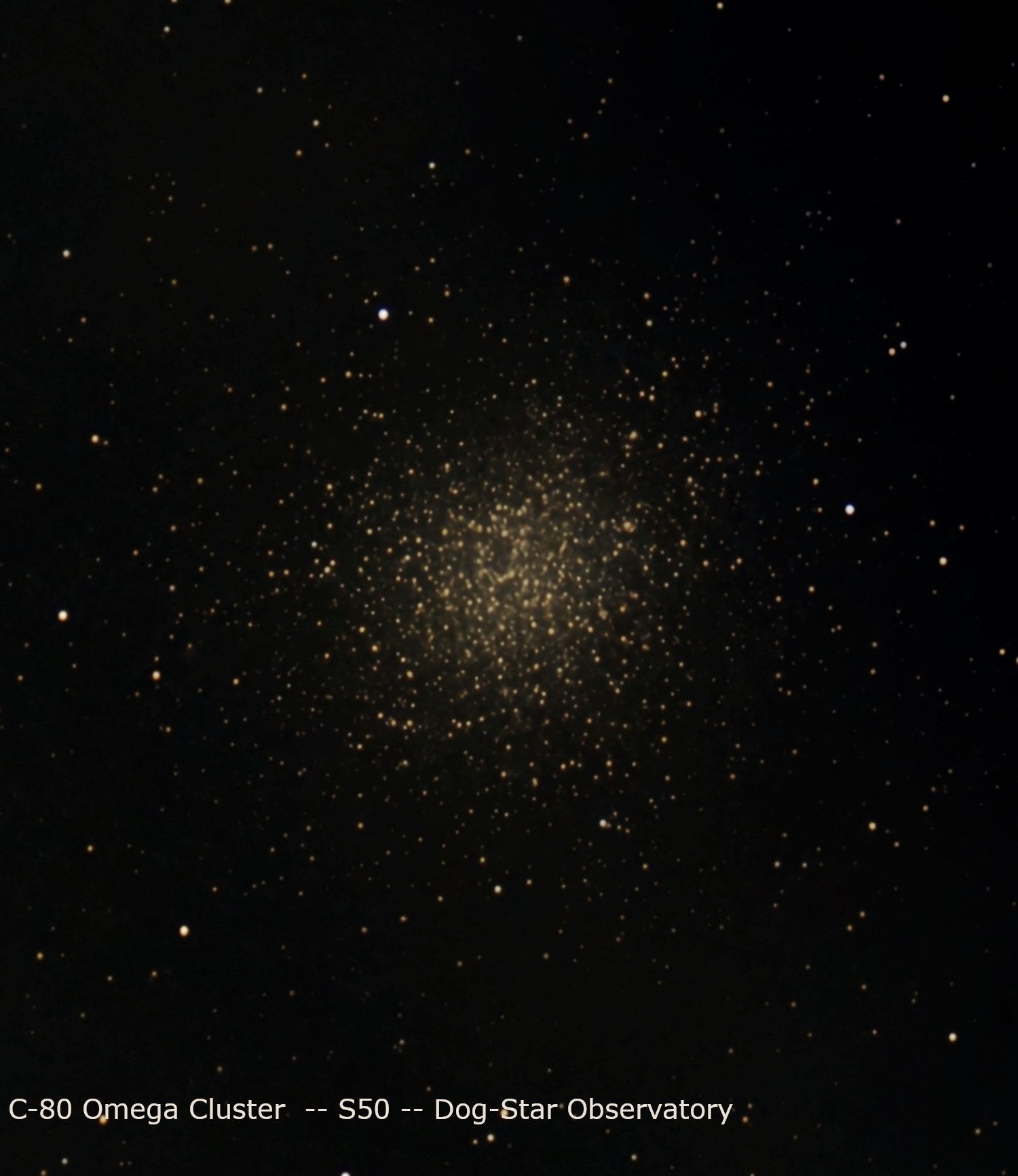
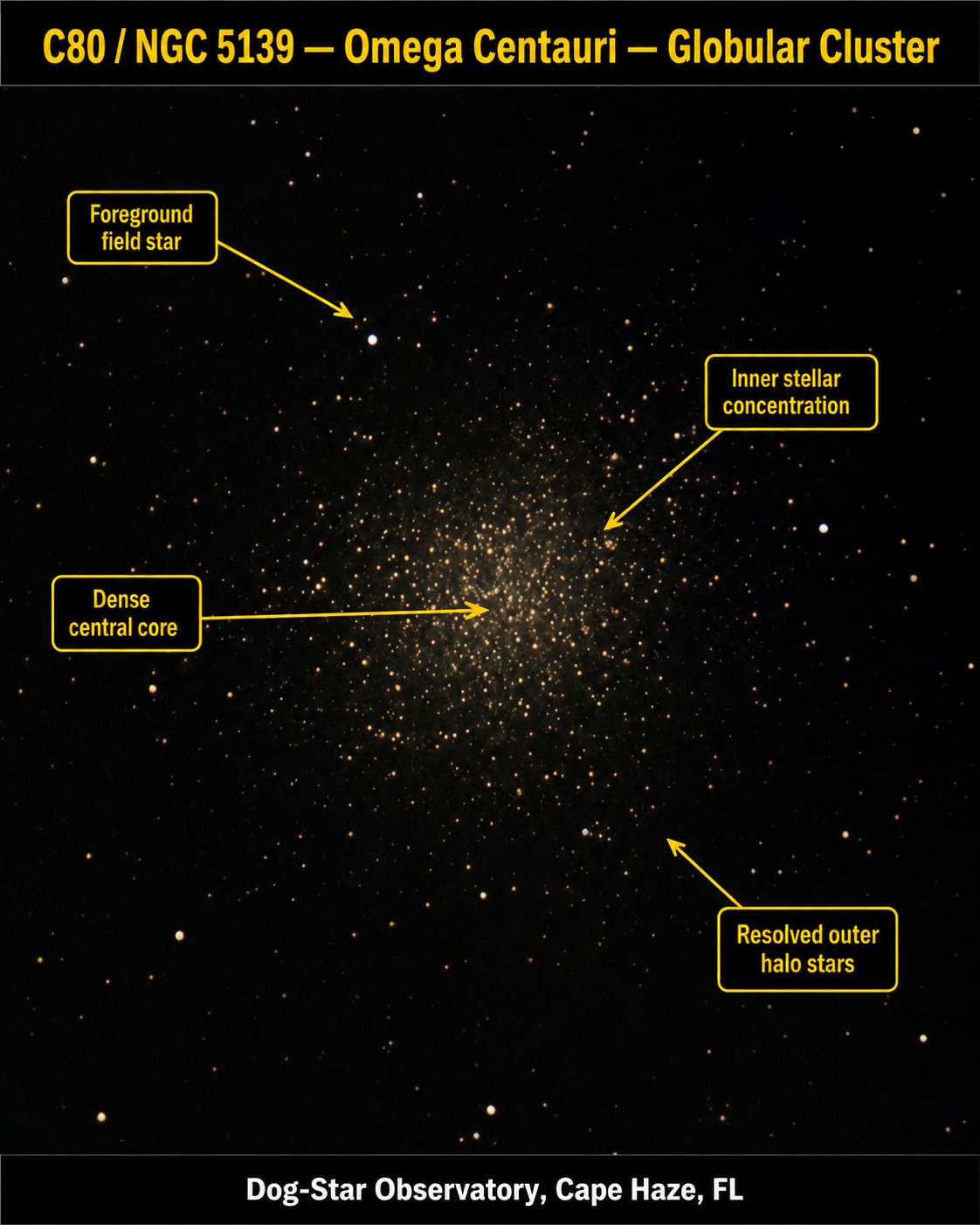
Picture 4 — Omega Centauri (NGC 5139) — Globular Cluster
Omega Centauri is the largest and most massive globular cluster associated with the Milky Way, located about 17,000 light-years from Earth in the constellation Centaurus. It contains millions of stars packed into a roughly spherical system more than 150 light-years across. Unlike a typical open cluster, whose stars are relatively young and loosely bound, Omega Centauri is an ancient, gravitationally concentrated stellar population belonging to the Galactic halo.
Omega Centauri is especially unusual because its stars do not all share exactly the same age or chemical composition. Multiple stellar populations indicate that star formation occurred in more than one episode, leading astronomers to suspect that the cluster may be the surviving nucleus of a dwarf galaxy that was disrupted and absorbed by the Milky Way. This complex history makes Omega Centauri an important object for studying both stellar evolution and the hierarchical growth of large galaxies.
Back to top
Home
Copyright G.M. Santoro, PhD, 2026 |
contact-gmsantoro@gmail.com